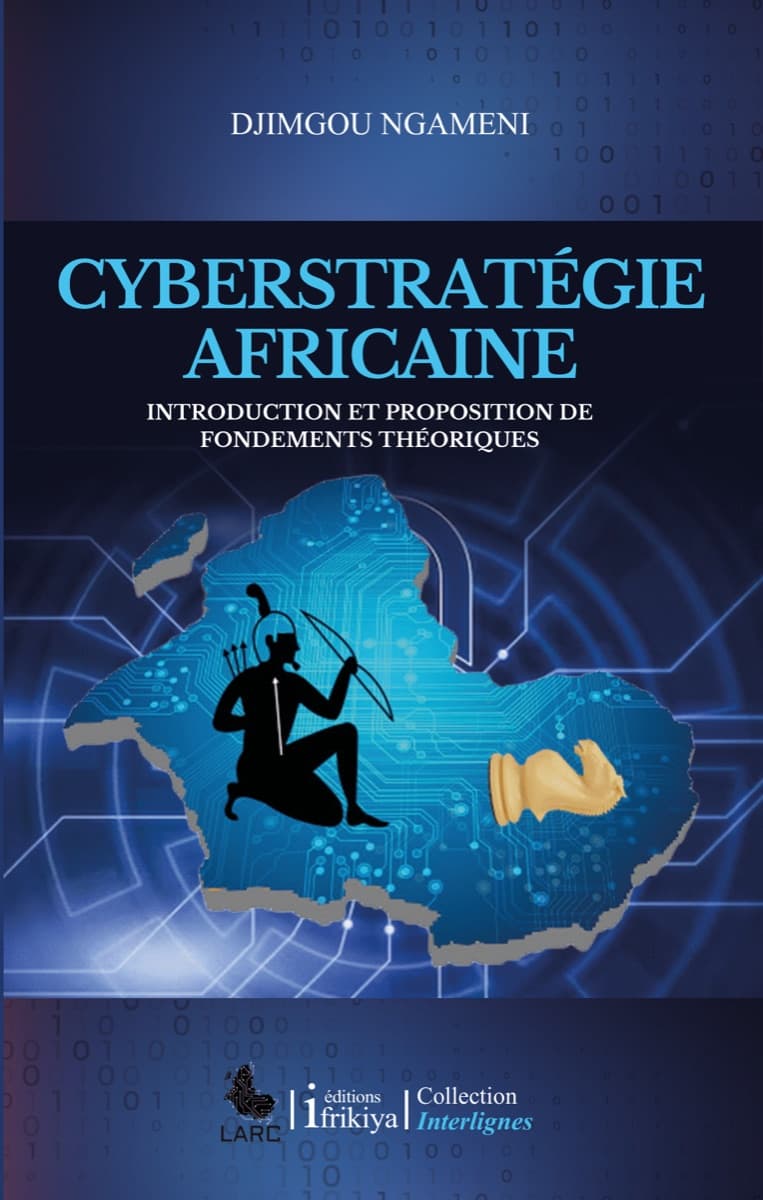
Cyberstratégie africaine
An introduction and a proposal of theoretical foundations
Founder of the African Laboratory for Cyberstrategy Research. Author of three books on African digital sovereignty. President of RHOPEN LABS.

These are not opinions. Each is argued in a published book or analysis, and the source is given.
Africa's digital debate is almost always about adoption: penetration rates, inclusion, services. That framing hides what matters. Cyberspace is a site of contest between actors, where lasting positions are settled. As long as it is treated as a market to equip rather than ground to hold, the continent lives under rules it did not write.
A published national strategy is not sovereignty. It takes an explicit doctrine, detection and response capability held locally, enforceable law, and senior staff trained to reason in terms of vital interests. Without those four supports, sovereignty stays a word in a speech.
Infrastructure owned elsewhere, data hosted elsewhere, standards written elsewhere, imagination produced elsewhere: the four classic dimensions of colonisation have exact equivalents in African digital space. Naming the phenomenon precisely, rather than using it as an activist metaphor, is what makes a policy response possible.
The continent trains competent, certified engineers. It trains very few people able to connect a technical threat to a state interest, draft a doctrine, or hold a position in international negotiation. That link decides whether Africa acts on the global digital balance or watches it.
Written between 2018 and 2024, from a first essay on African cyberdefence to a proposal of theoretical foundations.
An introduction and a proposal of theoretical foundations
L'Afrique au risque d'une cybercolonisation
Co-written with Prof. José Do Nascimento
A major challenge for Africa
Published in the African Cyberstrategy Review, the laboratory's journal.
Without a generation of strategists trained to think cyberspace, Africa will stay a spectator to the global digital balance of power.
In an interconnected world where technology is a lever of power, Africa stands at a decisive turn.
Will the continent's leaders make use of Africa's techno-geopolitical position?
Power is a long-debated concept. Applied to cyberspace, it opens an unprecedented strategic window for Africa.
A laboratory to formulate the doctrine, a company to apply it.
An independent laboratory that decodes, analyses and anticipates what is at stake in African cyberspace. It builds a structured body of knowledge on cyberspace with Africa as the epicentre of the thinking, and advises public authorities, decision-makers and digital actors on the strategies to hold.
The Cameroonian arm of the RHOPEN group applies to the continent's organisations what the laboratory sets out as doctrine: detection, response, risk assessment and software engineering, with data and teams held locally.